


Webinar on Advanced Graphical Deep learning for Depression Detection using EEG signals

why to Join the Knowledgeful Webinar

Advanced IEEE Transaction Paper Explanation
Ever wonder how you can speed up your research? Once you have a good reference paper to start and understand that. In this webinar, we speed up your research by giving you insight of a latest IEEE transcation research paper in whiteborading session.

Usage of Graphical Deep Learning
Learn Advanced Graphical Deep Learnign Approches which gives more data insights in spatiotemporal space

Certificate
Show to world what you have gained through this very infromative webinar.
What our research mentor Says


Jain (Deemed-to-be) University, School of Sciences
The webinar provided me with very good information about the topic…

University of Kerala
Interesting webinar.
Independent Researcher
Very informative session.
Kumaun University
Very interesting and informative session.
RP Ngoma College
I know how to generate electricity.
Rwanda Polytechnic - Ngoma College
Very interesting session.
Shahid Chamran University of Ahvaz
It was informative, hope to see more.
IPRC Ngoma
That is excellent
RP Ngoma College
The webinar was useful.
RP - Ngoma College
I'm interested to attend.
American University of the Middle East
Very technical presentation with detailed explanations…
M. B. G. P. G College Haldwani, Kumaun University Nainital
Session is very nice and knowledgeable. Great session.
Lebanese University
It is very interesting to hear about cerium oxide nanoparticles and their applications in biological activities.

S. K. V. T Government Degree College, Adikavi Nannaya University, Rajamahendravaram
Very informative. I gained knowledge about Nano technology.
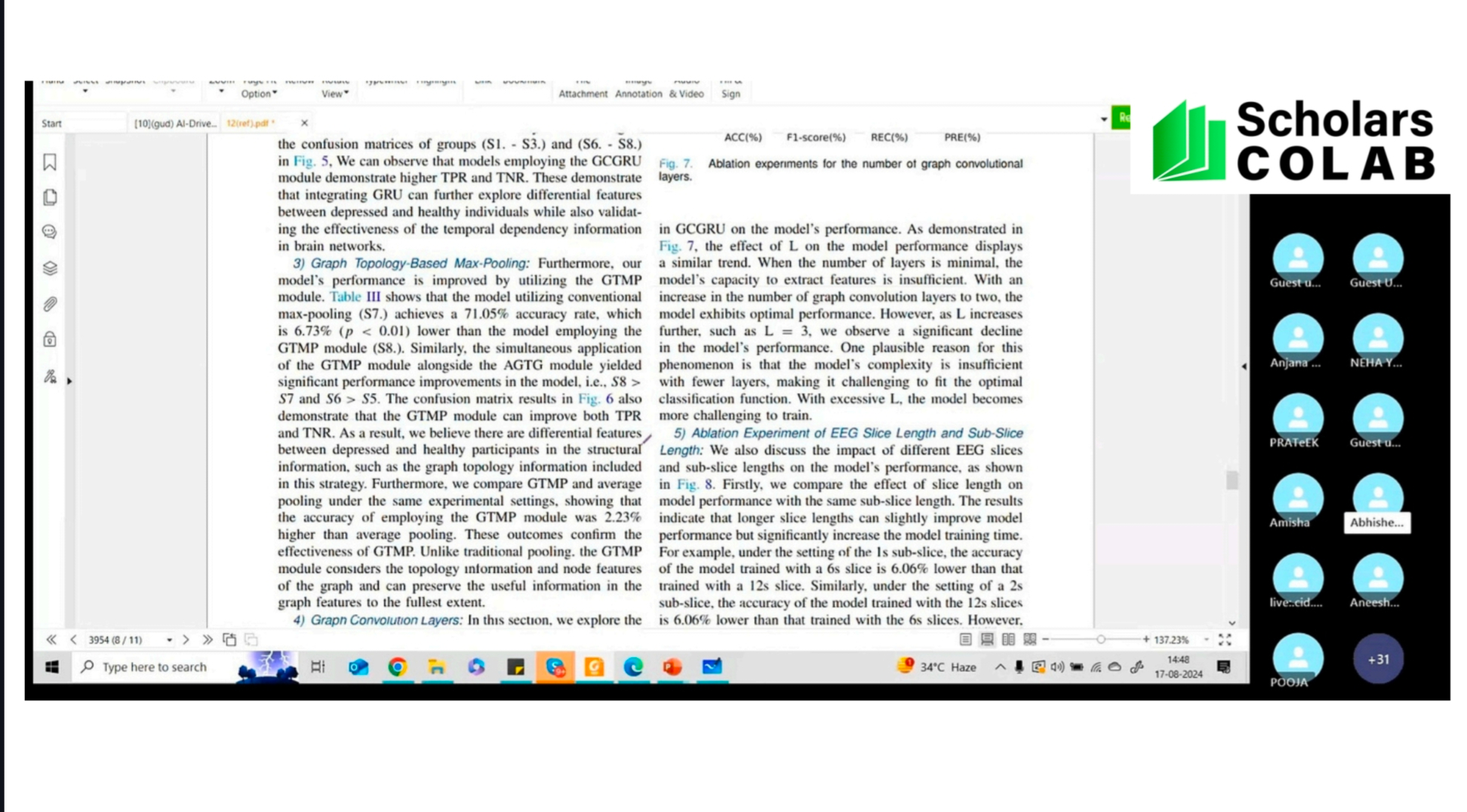
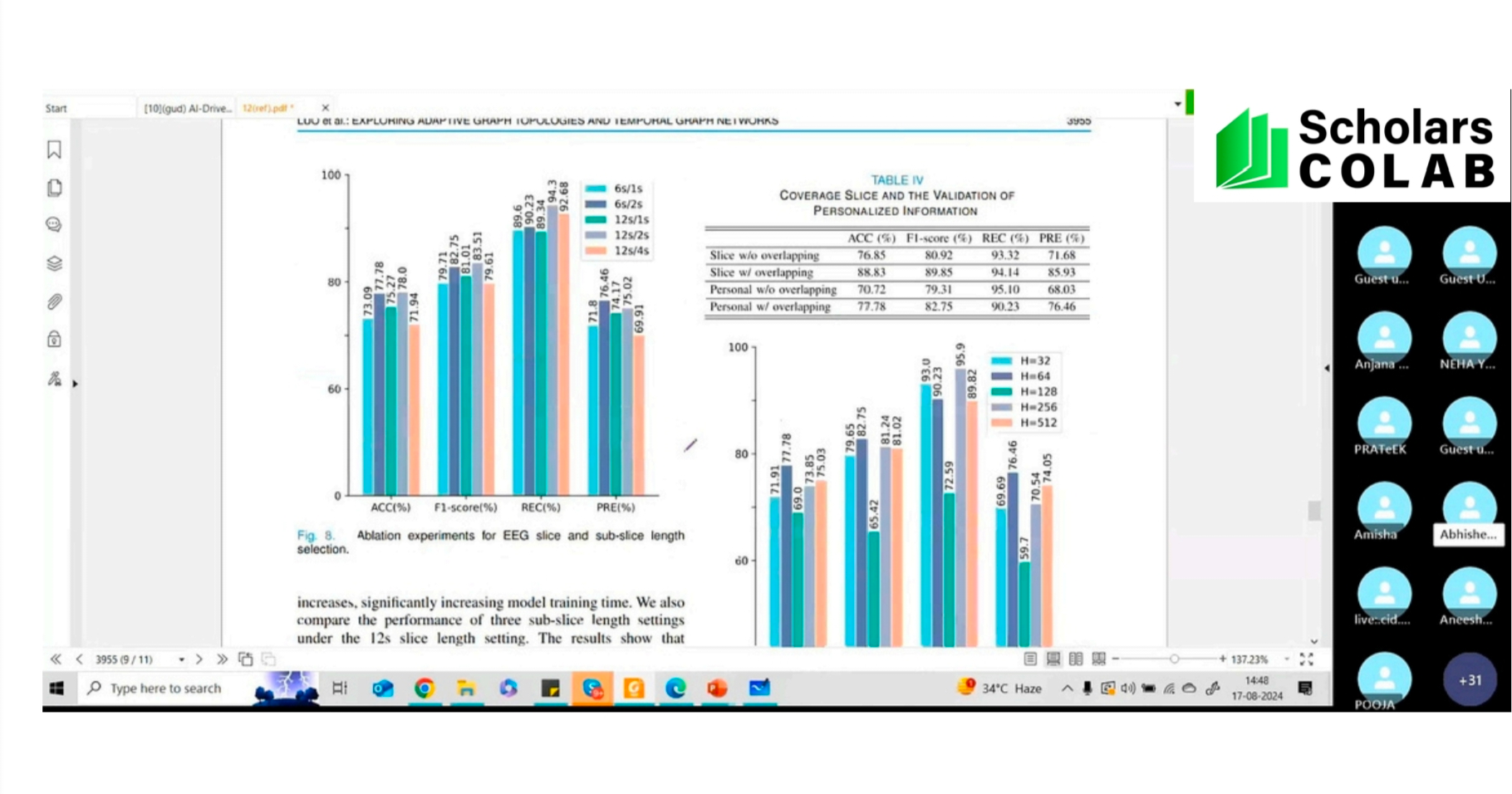
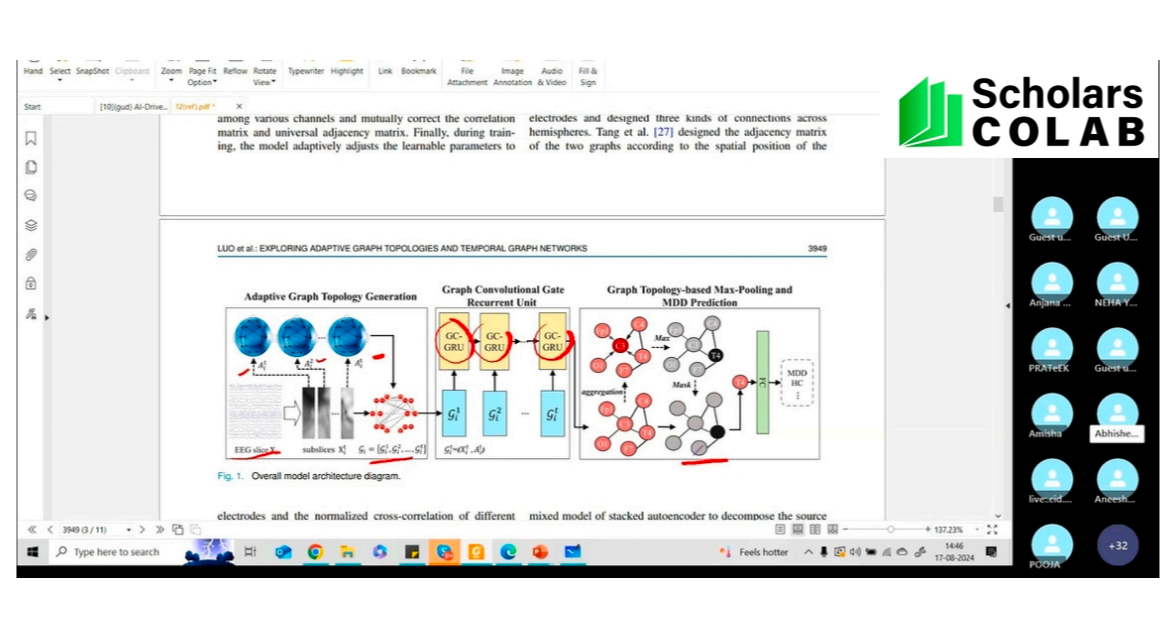
Previous Webinars Gallery
Our Past Collaborations
Hybrid Event, Organised by: ABV-IITM Gwalior


Frequently Asked Questions
What is the current state of deep learning technology in various fields?
Deep learning technology has demonstrated exceptional performance in areas such as image recognition and natural language processing due to its powerful nonlinear fitting capabilities and end-to-end learning advantages.
How is deep learning being applied to EEG signals?
Deep learning techniques are being used for various EEG signal analysis tasks, including emotion recognition, motor imagery, and disease diagnosis. Researchers are exploring methods to extract meaningful biomarkers from EEG data for detecting conditions like depression.
What are the main types of deep learning methods used for EEG signal analysis?
Deep learning methods applied to EEG signals can be broadly categorized into two types: - **CNN-Based Methods:** These treat EEG signals as images and use convolutional kernels to extract features. However, they often overlook the relationships between different EEG channels. - **GNN-Based Methods:** These map EEG signals into graph-structured data, utilizing pre-calculated graph adjacency matrices to represent channel relationships. This approach accounts for spatial structural relationships among channels.
What are the limitations of CNN-based algorithms for EEG analysis?
CNN-based algorithms primarily focus on feature extraction from EEG signals treated as images and do not fully consider the inter-channel relationships, potentially missing important spatial dynamics.
How do GNN-based algorithms improve upon CNN-based methods?
GNN-based algorithms enhance EEG analysis by mapping signals into graph-structured data, using adjacency matrices to represent the connections between different channels. This approach better captures the spatial relationships and can facilitate the extraction of cross-channel features.
What are the drawbacks of using pre-calculated graph adjacency matrices in GNN-based methods?
Pre-calculated graph adjacency matrices are fixed and cannot dynamically reflect individual brain network differences or changes in network connections over time. This limitation can be significant given the dynamic nature of brain networks.
How do changes in brain networks affect EEG signal analysis?
Brain networks can exhibit dynamic changes, such as variations during rapid eye movement (REM) sleep or differences in connectivity between depressed and healthy individuals. These temporal and individual variations in brain connectivity may impact the effectiveness of static graph models in capturing brain network dynamics.
What specific findings have been observed in EEG studies related to depression?
Studies have shown that brain network connectivity, such as cross-hemisphere functional connectivity, can be abnormally reduced in patients with mental illnesses like depression. This suggests significant differences in brain networks between depressed and healthy individuals.
Why is it important to account for dynamic changes in brain networks?
Dynamic changes in brain networks are crucial to consider because they reflect the real-time adjustments in brain connectivity, which can impact the accuracy of EEG signal analysis and the detection of neurological conditions.
About Us

Vidhilekha Soft Solutions Pvt Ltd, an Indian research consultancy headquartered in Gurugram, India, is responsible for free-thesis.com creation, upkeep, and operation. Vidhilekha Soft Solutions Pvt Ltd was founded in October 2022 and has been actively doing research in the area of machine learning and artificial intelligence ever since. The company is in its early phase; however, the minds behind the company’s existence have a rich research & industry exposure of 13 years.