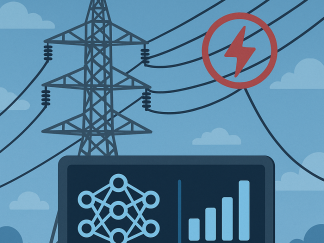



Advanced Transmission Line Fault Detection Using Deep Learning
Join our comprehensive webinar to explore cutting-edge deep learning techniques for efficient and accurate transmission line fault detection in modern power systems.
About This Webinar
Transmission line faults can cause severe disruptions in power delivery and damage to equipment. This specialized webinar introduces advanced deep learning approaches to fault detection, classification, and location that are revolutionizing power system protection and reliability.
Deep Learning Fundamentals
Understand core machine learning and deep learning concepts specifically applicable to power system fault analysis and detection.
Real-time Fault Analysis
Learn techniques for implementing neural networks that can detect and classify transmission line faults in real-time.
Data-Driven Approaches
Explore methods for gathering, preprocessing, and utilizing fault data to train robust deep learning models.
Featured Speaker
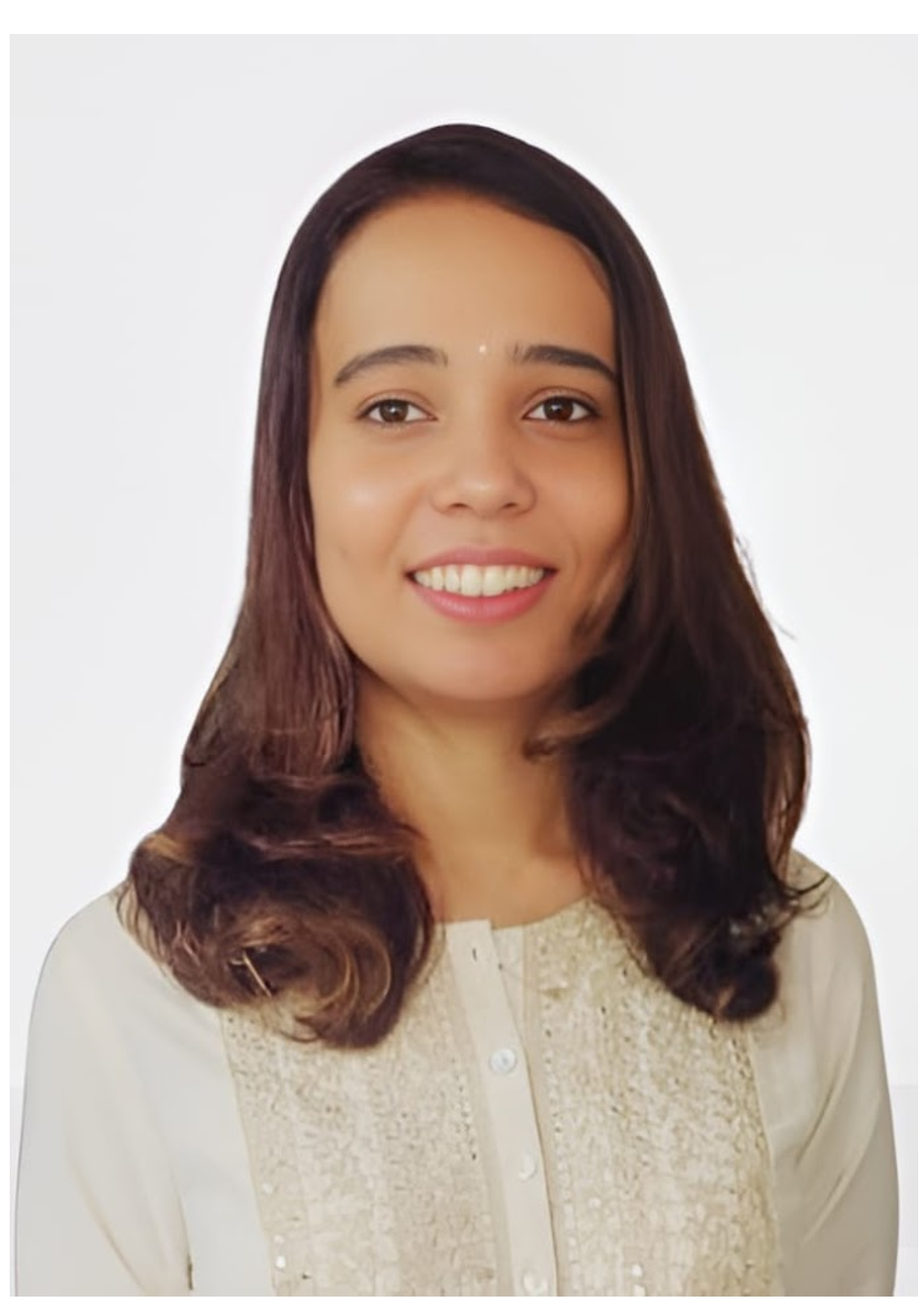
Currently working on automating processes in the US healthcare and insurance sector using cutting-edge Natural Language Processing (NLP) and Large Language Models (LLMs).
Dr. Bhatnagar's expertise lies at the intersection of conventional power system engineering and emerging intelligent technologies. Her work focuses on leveraging Artificial Intelligence (AI) and Machine Learning (ML) to enhance the accuracy, adaptability, and speed of protection mechanisms in modern power systems.
By integrating data-driven models into traditional protection frameworks, she contributes to the development of resilient and adaptive power distribution systems, particularly those incorporating renewable energy sources.
Selected Publications
"LSTM-based low-impedance fault and high-impedance fault detection and classification M Bhatnagar, A Yadav, A Swetapadma, AY Abdelaziz - Electrical Engineering, 2024
"A resilient protection scheme for common shunt fault and high impedance fault in distribution lines using wavelet transform M Bhatnagar, A Yadav, A Swetapadma - IEEE Systems Journal, 2022
"Integrating distributed generation and advanced deep learning for efficient distribution system management and fault detection M Bhatnagar, A Yadav, A Swetapadma - Arabian Journal for Science and Engineering, 2024
"Enhancing the resiliency of transmission lines using extreme gradient boosting against faults M Bhatnagar, A Yadav, A Swetapadma - Electric Power Systems Research, 2022
Webinar Schedule
• Overview of protection principles in transmission and distribution networks • Protection coordination issues arising from high renewable and distributed generation (DG) integration • Need for intelligent, adaptive protection in evolving grid environments .
• Role of AI/ML in enhancing fault detection, classification, and system reliability • Comparison with conventional rule-based relaying schemes • Commonly used algorithms: Decision Trees, Support Vector Machines, Random Forests, and Neural Networks • Data features used in AI-based protection (e.g., current/voltage patterns, wavelet transforms, time-frequency features)
• Fault analysis and classification using AI models applied to standard test systems like IEEE 33-bus distribution network and benchmark transmission line datasets • Performance metrics for evaluating AI model accuracy in protection tasks • Discussion on scalability and robustness of ML models in real-world conditions
• Preprocessed real-world or test system fault data • Feature extraction from voltage and current waveforms • Building and training an ML model (e.g., Random Forest or SVM) using scikit-learn • Evaluation through confusion matrix, precision, recall, and accuracy metrics • Model refinement and result interpretation for intelligent decision-making
• Challenges in deploying AI/ML models for real-time protection • Issues related to data availability, latency, model interpretability, and cyber-security • Future directions: adaptive relaying, transfer learning, decentralized AI agents for protection in smart grids
Frequently Asked Questions
Basic understanding of power systems and protection principles is recommended. No prior deep learning experience is necessary as fundamentals will be covered.
Yes, Dr. Bhatnagar will demonstrate code examples and provide a simple framework for participants to follow along with practical examples.
Yes, all registered participants will receive access to the webinar recordings and presentation materials for 30 days after the event.
The webinar is designed for both industry professionals and researchers. Dr. Bhatnagar will cover both theoretical foundations and practical implementation considerations.
Yes, all participants who attend the full webinar will receive a certificate of completion from Scholars Colab.