
Conducted Under IEEE MTT-S Chapter
ABV-Indian Institute of Information Technology and Management, Gwalior
VLSI & Circuit Design Research
CH11187

Understanding SRAM Design Landscape: Circuits and Materials-Based Perspective

Join this comprehensive webinar exploring cutting-edge SRAM design methodologies, from circuit-level optimization to advanced materials integration, led by renowned VLSI expert Dr. Ashish Sachdeva.

15th October 2025
4:00 PM (GMT+5:30)
00 Days
00 Hours
00 Minutes
00 Seconds
Register Now - Free

About This Webinar

This webinar provides an in-depth exploration of SRAM (Static Random Access Memory) design from both circuit-level and materials perspectives, covering advanced techniques for stability improvement, power reduction, and performance optimization in modern semiconductor technologies.

Circuit Design Fundamentals

Comprehensive coverage of SRAM cell structures, including 6T, 8T, 10T, and novel multi-transistor configurations with focus on read/write stability and performance metrics.

🔬

Materials Integration

Exploration of emerging materials and their impact on SRAM performance, including FinFET, FDSOI, and advanced nanoscale technologies for next-generation memory design.

📊

Low-Power Techniques

Advanced methodologies for power optimization in SRAM designs, including subthreshold operation, voltage scaling, and energy-efficient architectures for IoT and mobile applications.

Research Excellence

Dr. Sachdeva's research encompasses comprehensive SRAM design innovations, spanning from fundamental circuit architectures to advanced materials implementation, with significant contributions to stability analysis and low-power design methodologies.

10T SRAM Cell with Improved Read Performance and Expanded Write Margin
Advanced semiconductor memory research
Novel approaches to stability enhancement in subthreshold SRAM operations
Low-power VLSI design
Materials-based optimization techniques for nanoscale memory circuits
Advanced materials integration

Research Impact

722+
Citations
50+
Publications
15+
Years Experience

Featured Speaker

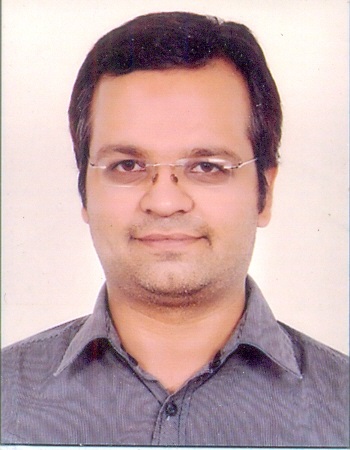
Dr. Ashish Sachdeva
Dr. Ashish Sachdeva
Professor, VLSI & Low-Power Circuit Design | Maharishi Markandeshwar University

Dr. Ashish Sachdeva is a distinguished professor and researcher specializing in VLSI design, with particular expertise in SRAM circuit architectures, low-power design methodologies, and subthreshold circuit operations. His research has made significant contributions to the field of semiconductor memory design.

With over 722 citations and numerous publications in prestigious journals, Dr. Sachdeva has established himself as a leading authority in SRAM stability analysis, performance optimization, and materials integration for advanced memory systems. His work bridges theoretical circuit design with practical implementation challenges in nanoscale technologies.

SRAM Design
Low Power VLSI
Stability Analysis
Subthreshold Circuits
15+
Years Experience
722+
Citations
50+
Research Papers
20+
Conference Talks

Research Focus

Dr. Sachdeva's research encompasses the complete SRAM design landscape, from fundamental circuit architectures to advanced materials integration. His work focuses on developing innovative solutions for stability improvement, power reduction, and performance enhancement in modern and emerging semiconductor memory technologies.

Webinar Curriculum

A comprehensive journey through SRAM design principles, from foundational concepts to cutting-edge research in circuit optimization and materials science

Introduction to SRAM Design Fundamentals

Overview of SRAM architecture | Comparison with DRAM and other memory technologies | Key performance metrics (read/write stability, speed, power) | Evolution of SRAM design across technology nodes.

Classical 6T SRAM Cell Architecture

Structure and operation principles | Read and write mechanisms | Stability analysis using butterfly curves | Limitations and challenges in scaled technologies | Static Noise Margin (SNM) analysis.

Advanced Multi-Transistor SRAM Cells

8T, 10T, and beyond: architectural innovations | Improved read stability techniques | Write-assist mechanisms | Performance comparisons and trade-offs | Application-specific cell selection criteria.

Low-Power SRAM Design Techniques

Supply voltage scaling strategies | Subthreshold SRAM operation | Power gating and retention techniques | Dynamic voltage and frequency scaling | Energy-efficiency optimization methods.

Stability Enhancement Methodologies

Process variation impacts on stability | Read stability improvement techniques | Write margin enhancement strategies | Half-select disturbance mitigation | Statistical design approaches.

Materials Perspective: FinFET and Beyond

FinFET technology for SRAM | FDSOI advantages in memory design | 2D materials (graphene, TMDs) integration | Emerging device technologies (TFETs, NCFETs) | Material selection impact on performance.

Nanoscale Challenges and Solutions

Short-channel effects in scaled SRAM | Process variation and mismatch | Soft error susceptibility | Leakage current management | Temperature and voltage variation effects.

SRAM for Emerging Applications

IoT and ultra-low-power requirements | Near-threshold computing | In-memory computing architectures | AI/ML accelerator memory | Automotive and safety-critical applications.

Design Tools and Simulation Methodologies

SPICE-based circuit simulation | Monte Carlo variation analysis | Corner analysis techniques | Power estimation tools | Layout considerations and DRC/LVS.

Future Trends and Research Directions

3D-stacked memory architectures | Spin-transfer torque MRAM integration | Neuromorphic computing memory | Quantum-dot cellular automata | Research opportunities and career guidance.

Frequently Asked Questions

What makes SRAM different from other memory technologies?
SRAM (Static RAM) uses bistable latching circuitry to store each bit, providing faster access times and no refresh requirement compared to DRAM. However, it requires more transistors per bit (typically 6), making it larger and more expensive. SRAM is ideal for cache memory and high-speed applications where performance is critical.
Why are multi-transistor SRAM cells (8T, 10T) necessary?
Traditional 6T SRAM cells face read stability challenges in scaled technologies due to process variations. Multi-transistor cells improve read stability by using dedicated read ports, separate read and write paths, or additional transistors for enhanced noise margins. These designs trade area for improved reliability and lower operating voltages.
What is subthreshold SRAM operation?
Subthreshold operation refers to running SRAM cells at supply voltages below the transistor threshold voltage. This dramatically reduces power consumption but comes with challenges in stability, speed, and sensitivity to variations. It's particularly important for ultra-low-power applications like IoT devices and biomedical implants.
How do advanced materials impact SRAM design?
Advanced materials like FinFET structures, FDSOI technology, and emerging 2D materials offer improved control over short-channel effects, reduced leakage, and better electrostatic control. These materials enable continued scaling while maintaining or improving SRAM stability, power efficiency, and performance in nanoscale technologies.
What is Static Noise Margin (SNM) and why is it important?
Static Noise Margin is a key metric measuring the maximum noise voltage an SRAM cell can tolerate before changing state. It's visualized using butterfly curves and is critical for ensuring data integrity. SNM directly impacts yield and reliability, especially in scaled technologies with increased process variations.
What are the main challenges in nanoscale SRAM design?
Key challenges include process variation and mismatch, increased leakage currents, soft error susceptibility, reduced noise margins, and difficulty maintaining stability at low voltages. Designers must balance performance, power, area, and reliability while dealing with these increasing variability issues in advanced nodes.
Who should attend this webinar?
This webinar is ideal for graduate students, researchers, and professionals in VLSI design, semiconductor industry engineers working on memory design, faculty members teaching digital circuit design, and anyone interested in advanced memory architectures and low-power circuit techniques.
Will certificates be provided to participants?
Yes, all registered participants who attend the webinar will receive an official e-certificate of participation from the IEEE MTT-S Chapter and ABV-IIITM Gwalior.

Contact & Support

For queries regarding registration, participation, or technical issues, please email:

ieee.mtts@iiitm.ac.in

Or call: +91-9876543210

Ready to Join the SRAM Design Webinar?

Reserve your spot now and gain insights from leading experts in VLSI and memory design. Registration is free and open to all interested participants.

Register Now - Free