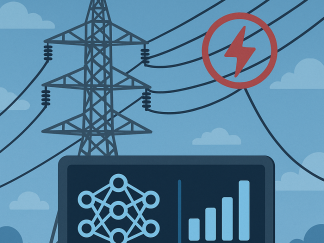



PhD in Electronics
Talk one-to-one with a Electronics PhD mentor about admission, funding, your research proposal, the PhD journey and what comes after.
About ScholarsColab: ScholarsColab is a research mentorship platform by Vidhilekha Soft Solutions Pvt Ltd, recognised as a startup by DPIIT, Government of India.
A PhD in Electronics is a research degree in which you produce original work under expert supervision. Whether you are deciding if it is right for you, comparing options, or already part-way through, many questions are easier to answer with someone who has done it. On ScholarsColab you can book a one-to-one online session with a Electronics PhD mentor and talk through anything, from admission and funding to your research proposal and career plans.
Electronics PhD Mentors
Rahul Kumar
🏢 Phd Scholar NIT PATNA
Dr.Monisha Biswas
🏢 Assistant Professor
Dr. J.N. Chandra Sekhar
🏢 Sri Venkateswara University
Anagh Sankar Das
🏢 Ph.D. in Electronics and Communication Engineering
Prof. Dr. Adel A. Elbaset
🏢 Minia University, Faculty of Engineering, Elminia, Egypt
BHARATH KUMAR K
🏢 Lecturer in Electrical & Electronics Engineering
Asif Eakball Emon
🏢 Bangladesh University of Business and Technology
Umesh Kumar Soni
🏢 Associate Professor , EED, AKS University Satna
Dr. Pushpalatha Naveenkumar
🏢 Sri Eshwar College of Engineering, IndiaShowing 9 of 66 experts
Browse All Electronics Experts →Who Are the Electronics Mentors?
Every mentor on ScholarsColab already holds a PhD and works at a university or college, so they have been through admission, research, publishing and the PhD journey themselves, and now guide students through it. You can check each mentor's publications and where they were published on their individual profile on ScholarsColab before you book.
- PhD-qualifiedEvery mentor has completed a doctorate.
- University and college facultyThey teach, supervise and research at universities and colleges.
- Proven publication recordTheir published work is listed on their profile, so you can judge its quality yourself.
Research Areas of Our Electronics Mentors
45 of our Electronics mentors have their Google Scholar publications on ScholarsColab. Together they have published 1,462 papers between 4 and 2040, cited 20,139 times in total according to Google Scholar. Their work returns again and again to Power Quality, Electric Vehicle and Multilevel Inverter.
Recurring research themes
- Power Quality43 papers · 16 mentors
- Electric Vehicle43 papers · 16 mentors
- Multilevel Inverter52 papers · 12 mentors
- Motor Drive45 papers · 10 mentors
- Dc-dc Converter36 papers · 11 mentors
- Induction Motor49 papers · 10 mentors
Recent publications by our Electronics mentors
- 4 The Resilience of Artificial Intelligence in the Mechatronics Sector
- COMPARATIVE ANALYSIS OF LOAD ASSESSMENT IN WIND-SOLAR HYBRID SYSTEMS USING HARDWARE AND MATLAB/SIMULINK
- An Integrated IoT Framework for Proactive Road Safety and Accident Mitigation in Hilly Terrains
- A Novel Wavelet-Based Approach for Transmission Line Fault Detection and Protection
- Mathematical Model and Its Realization of Subthreshold Internal Membrane Dynamics and Implementation in CMOS Neuromorphic Systems
- Synergistic Integration of Modular Four-Channel 50 kW WPT System: Enhancing Fast EV Charging and PMSM Drive Integration
- Design and analysis of a novel seven-level DC–AC converter with high gain and reducing spike current capabilities
- Integrating artificial intelligence and internet of things for smart healthcare systems
Possible PhD research directions
Based on what our Electronics mentors have published, a PhD in Electronics with their guidance could explore:
- Power Quality, especially where it meets multilevel inverter
- Electric Vehicle, especially where it meets dc-dc converter
- Multilevel Inverter
- Motor Drive, especially where it meets induction motor
These directions are drawn from published work and are a starting point, not fixed topics. Discuss which fits your interests in a first meeting with a mentor. Source: mentors' Google Scholar profiles on ScholarsColab, updated October 2026.
What You Can Discuss With a Electronics PhD Mentor
- Whether a PhD in Electronics fits your goals, and how it compares with other doctorate options
- Funding options: scholarships, fellowships and assistantships
- Choosing a research topic and writing your research proposal
- Approaching supervisors and preparing for PhD interviews
- Managing the PhD journey: milestones, publications and staying on track
- Careers after a PhD in Electronics: academia, industry and research roles
How Mentoring Works
Four simple steps, from choosing your mentor to talking it all through.
- Step 1
Choose a mentor
Browse Electronics PhD mentors and compare their profiles and publications.
- Step 2
Book a time
Pick a slot that suits you from the mentor's calendar.
- Step 3
Start with a short call
A 10-minute first meeting to see if the mentor is right for you.
- Step 4
Book a longer session
Schedule a full one-to-one online meeting for all your questions.
Talk to a Electronics PhD Mentor
Choose a mentor, book a time that suits you, and get clear answers in a one-to-one online session.
Find a Electronics MentorCheck meeting price
Use this short first call to explain your questions and see whether the mentor is the right fit. If it helps, you can then book and schedule a longer meeting with the same mentor.
Choose a Electronics mentorRelated Fields
Frequently Asked Questions
Who are the Electronics PhD mentors on ScholarsColab?
Every Electronics mentor holds a PhD and works at a university or college, with a track record of published research. You can check each mentor's publications, and where they were published, on their profile on ScholarsColab before you book.
What can I discuss with a Electronics PhD mentor?
Anything about your PhD journey: whether to do a PhD, choosing programs and supervisors, funding, your research proposal, applications and interviews, managing your research, and careers after the PhD.
How much does a meeting cost?
You start with an initial 10-minute meeting for ₹299 (INR). It lets you explain your questions and decide whether the mentor is right for you. If it is, you can book and schedule a longer meeting with the same mentor.